The Incentive Structure of Election and Re-Election
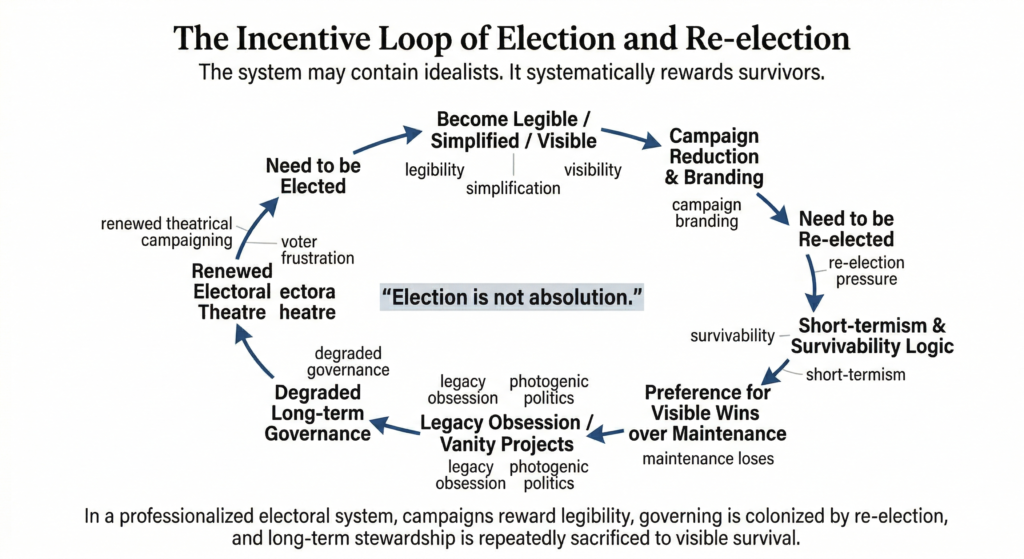
Democracy likes to congratulate itself on elections. This is understandable. Elections are preferable to succession by blood, rule by uniform, or instruction from a hereditary imbecile in ceremonial dress. They allow governments to be dismissed without civil war. They create at least the possibility of accountability. They remind rulers, now and then, that the public is not livestock. All that is true. It is also incomplete. For elections do not merely discipline power. They also shape it. They do not simply choose office-holders after the fact; they train office-seekers beforehand. They reward certain habits of mind, certain reflexes of speech, certain ways of seeing the world. And once politics becomes a profession, elections cease to be periodic tests of public trust and become the atmospheric condition in which the professional politician lives, breathes, calculates, flatters, evades, survives, and decays.
When Politics Became a Profession
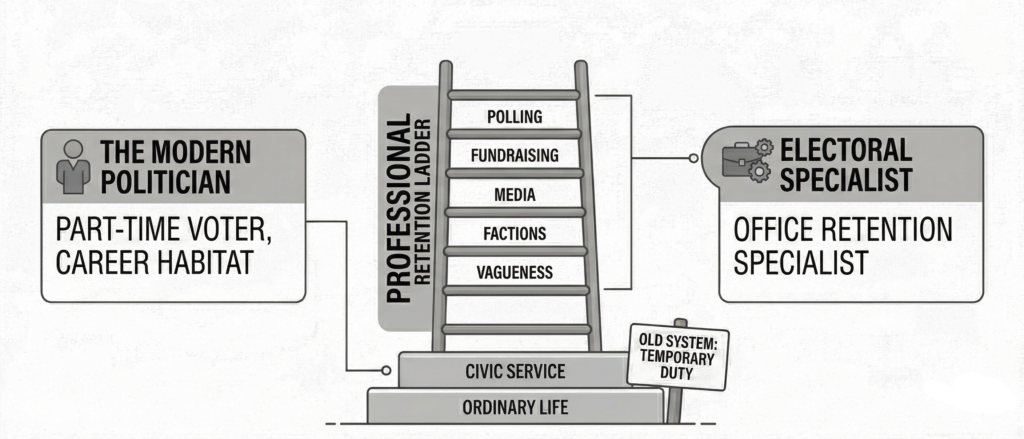
Politics was not always a profession. There was a time when public office was treated as a burden of citizenship rather than a permanent career, a temporary duty rather than a salaried identity. Modern democracy changed that. It transformed politics from civic interval into professional ladder, producing a class of specialists whose chief expertise is not law, war, philosophy, or trade, but the acquisition and retention of office itself. The professional politician is not a law of nature but a historical invention, shaped by parties, mass media, advisers, and electoral machinery. And what history has invented, history can also undo.
Professionalized Power
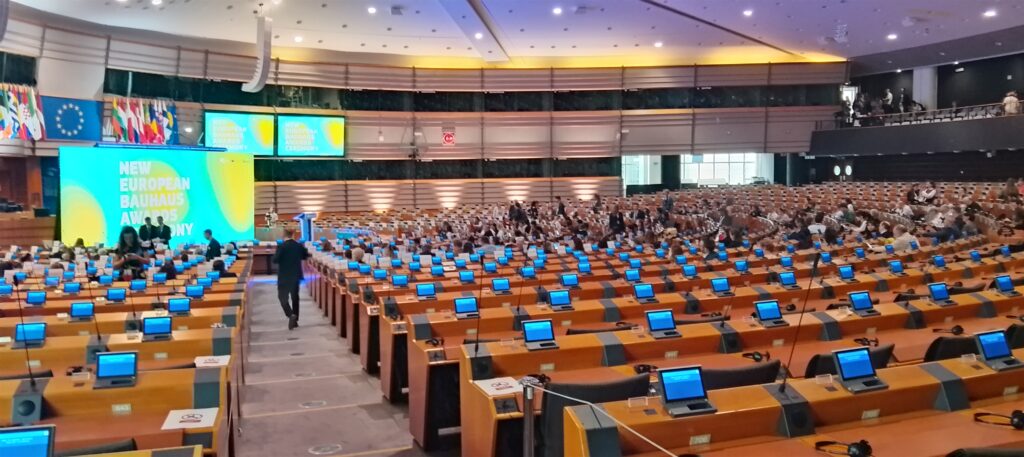
We abolished kings but professionalized their functions. We dismantled aristocracies yet constructed electoral dynasties. The vocabulary modernized. The permanence remained.
Democracy was never meant to be a career path. It was meant to prevent power from hardening. But when office becomes profession, incentives shift. Visibility replaces judgment. Survival replaces stewardship. Politics becomes optimization for re-election rather than responsibility for the century.
The problem is not representation.
The problem is its professionalization.
The Architecture We Inherit, the Architecture We Choose
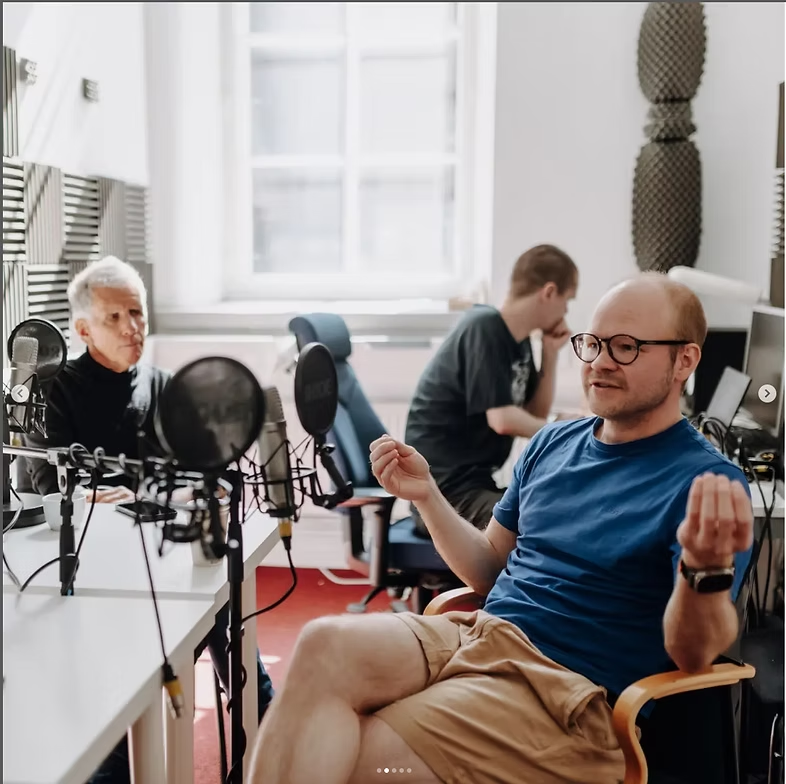
In May 2023, we sat down with architect Eero Lundén and Mark Linder to explore a question that continues to haunt the built
The Vultures and the Silence: Defending Gamified Cohousing and Democracy in Finland
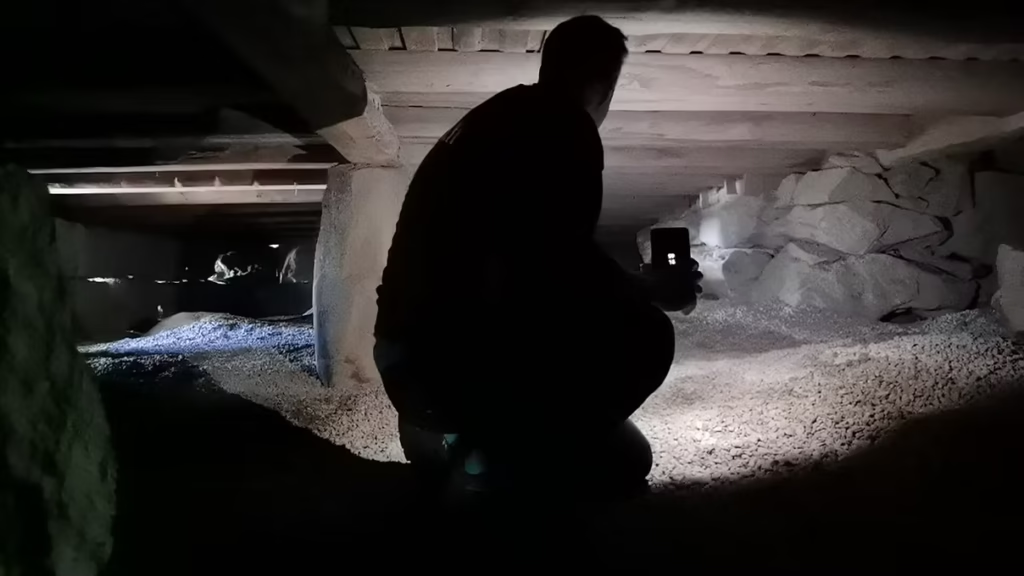
After years of positive press, Pedro Aibéo speaks out against recent media distortions
Full Transparency Challenge – Gamified Cohousing Lappeenranta
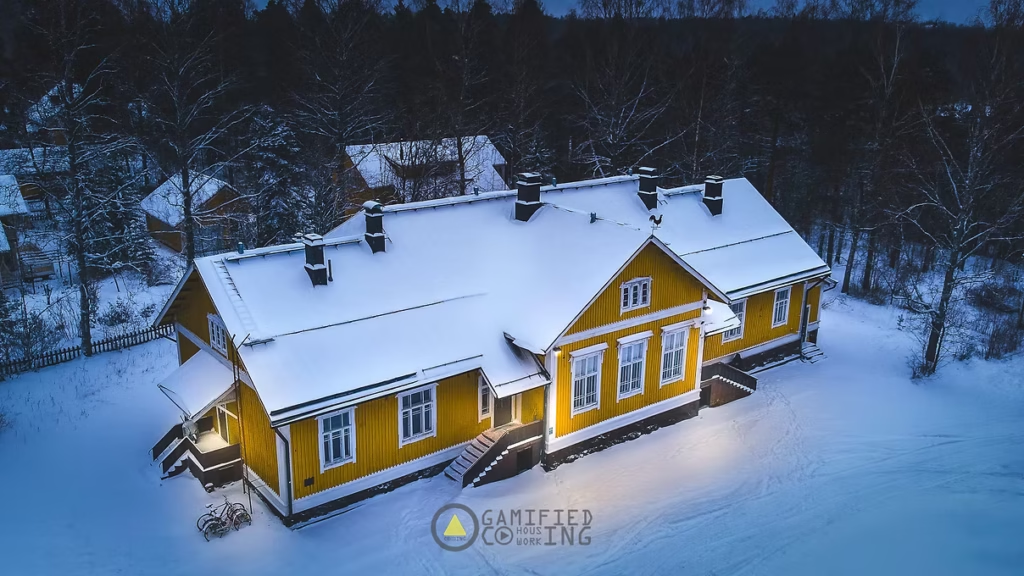
Gamified Cohousing’s renovation of the Kanavansuu school in Lappeenranta has been
The Future of Construction, Democratic or Autocratic?

The Future of Construction, Democratic or Autocratic? The Keynote speech by Pedro Aibéo, at BILT EUR conference in Riga, 2024
Architectural Democracy’s podcast

We started the recordings of a series of discussions around Architecture and Democracy with invited guests.
Debate on Architectural Democracy, between John Keane, Saskia Sassen and Pedro Aibéo
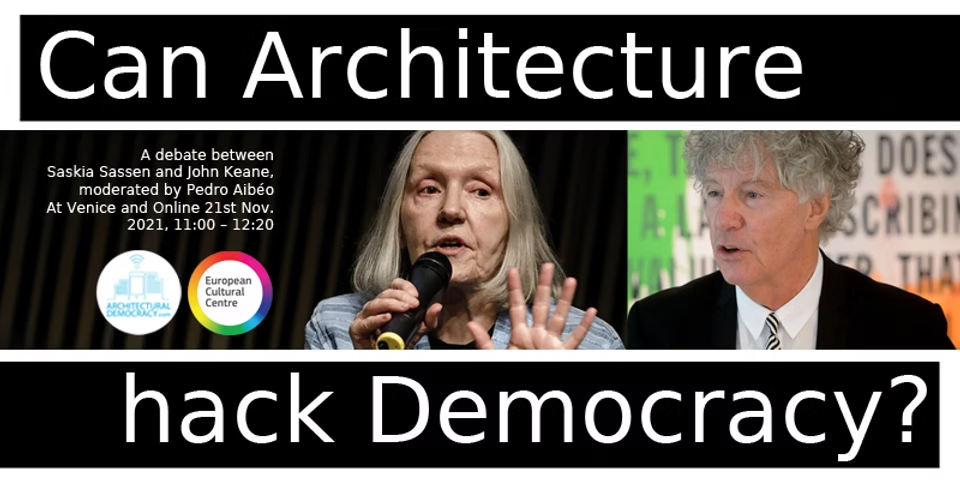
This transcript has been condensed, edited and referenced for clarity. Full debate can be
Monthly Political Evenings of Lohja in English starting this February

Last year of 2021 I was a political candidate for the city council of Lohja. I got enough