The Incentive Structure of Election and Re-Election
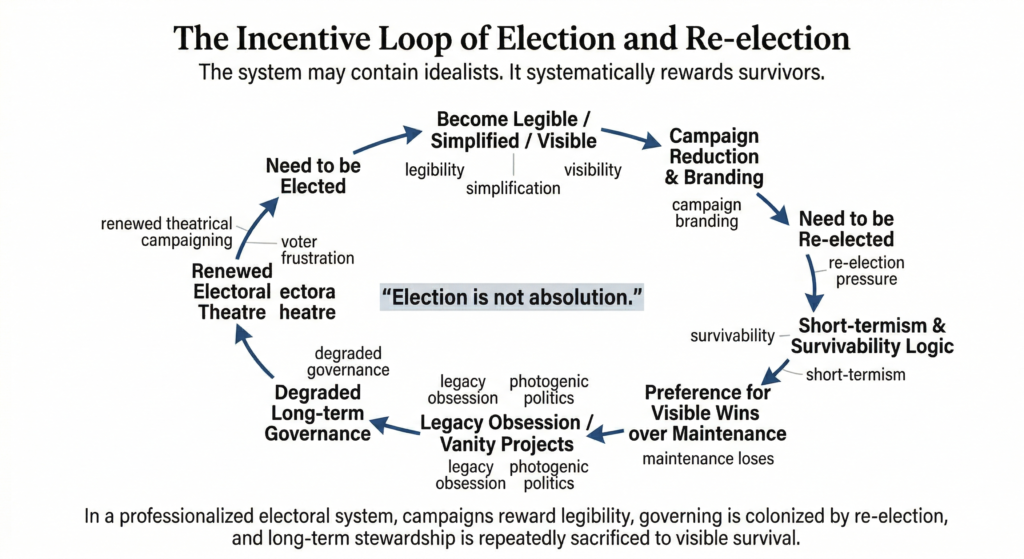
Democracy likes to congratulate itself on elections. This is understandable. Elections are preferable to succession by blood, rule by uniform, or instruction from a hereditary imbecile in ceremonial dress. They allow governments to be dismissed without civil war. They create at least the possibility of accountability. They remind rulers, now and then, that the public is not livestock. All that is true. It is also incomplete. For elections do not merely discipline power. They also shape it. They do not simply choose office-holders after the fact; they train office-seekers beforehand. They reward certain habits of mind, certain reflexes of speech, certain ways of seeing the world. And once politics becomes a profession, elections cease to be periodic tests of public trust and become the atmospheric condition in which the professional politician lives, breathes, calculates, flatters, evades, survives, and decays.
When Politics Became a Profession
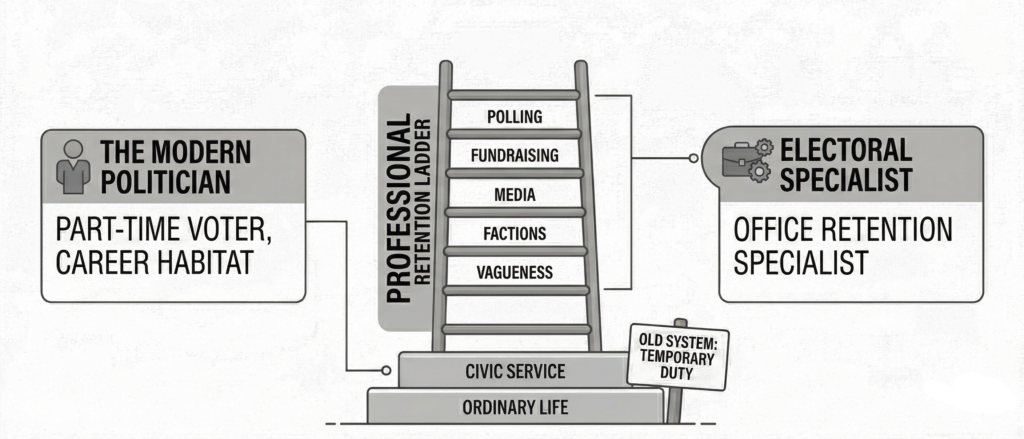
Politics was not always a profession. There was a time when public office was treated as a burden of citizenship rather than a permanent career, a temporary duty rather than a salaried identity. Modern democracy changed that. It transformed politics from civic interval into professional ladder, producing a class of specialists whose chief expertise is not law, war, philosophy, or trade, but the acquisition and retention of office itself. The professional politician is not a law of nature but a historical invention, shaped by parties, mass media, advisers, and electoral machinery. And what history has invented, history can also undo.
Professionalized Power
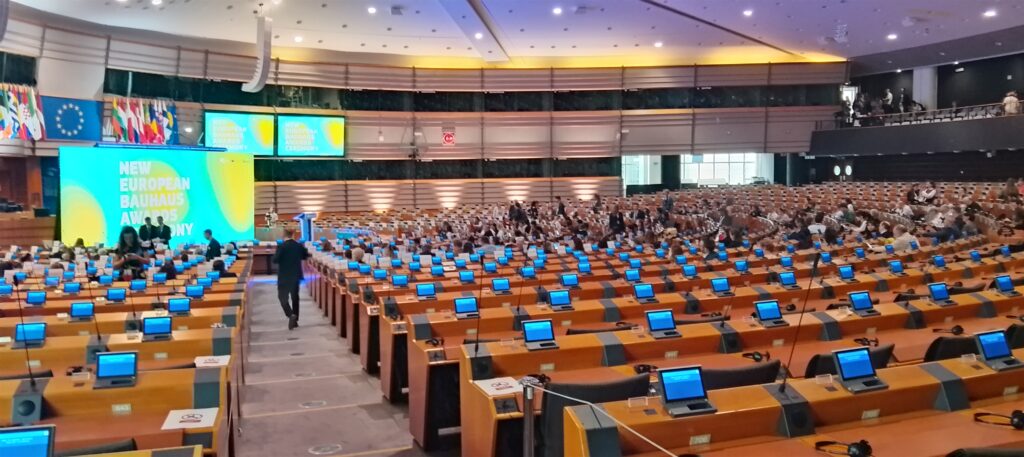
We abolished kings but professionalized their functions. We dismantled aristocracies yet constructed electoral dynasties. The vocabulary modernized. The permanence remained.
Democracy was never meant to be a career path. It was meant to prevent power from hardening. But when office becomes profession, incentives shift. Visibility replaces judgment. Survival replaces stewardship. Politics becomes optimization for re-election rather than responsibility for the century.
The problem is not representation.
The problem is its professionalization.
Why I Am Running Again for the 2025 Municipal Elections in Lohja

Four years ago, I stepped into the local politics of Lohja, first invited by the Green party and then from Meidan Lohja. I opted ML as I
Monthly Political Evenings of Lohja in English starting this February

Last year of 2021 I was a political candidate for the city council of Lohja. I got enough
How to be a political candidate without knowing the country’s language
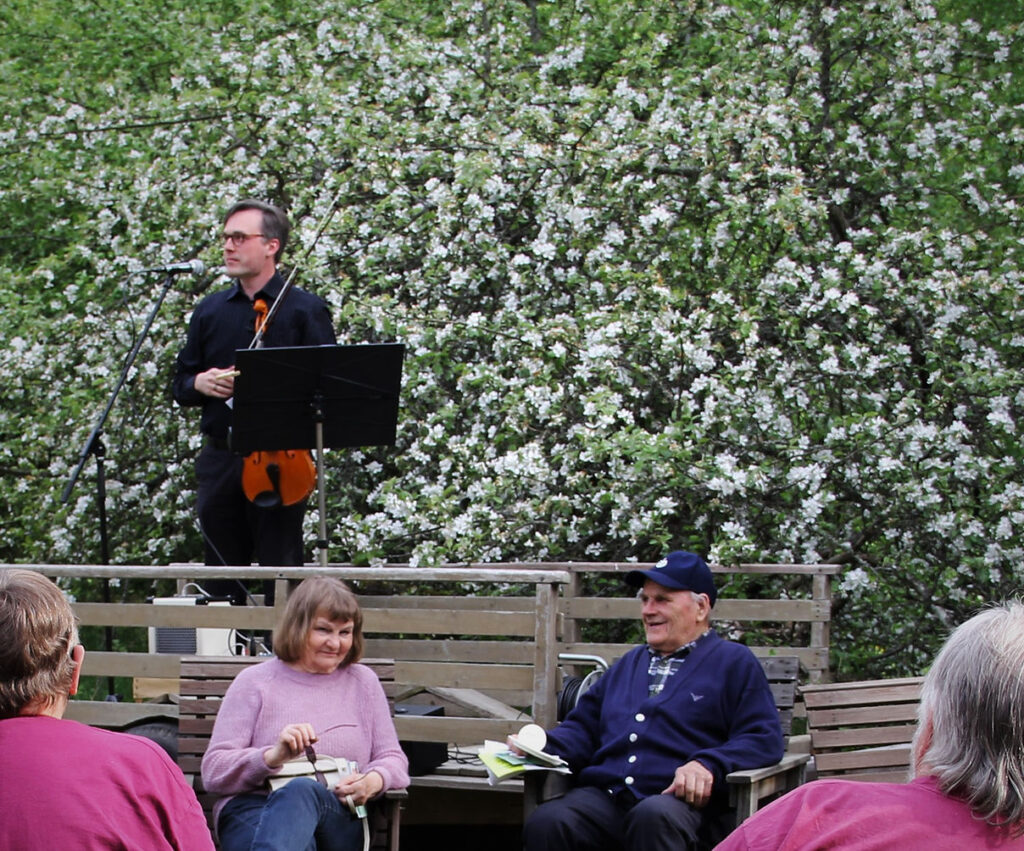
Running for municipal elections as a foreigner in a small city near Helsinki, without
Finnish MPs voting today on CETA without having read it!

We are sure none of the MPs read and understood this complicated and VERY long agreement. Please remind your local
The Direct Democracy Helsinki Group

Direct Democracy is based on the idea that people have to be responsible for their own mistakes so, collective thinking is very
Finnish State Prize 2017 awarded to Perpetuum Mobile

Perpetuum Mobilε (of which me, Pedro Aibéo, am the vice-chairman) has been awarded the special thematic State Prize for
Nigerian Military makes the Israeli Defence Forces (IDF) look like humanitarian NGOs

Cities of West Africa, as I later discussed with Associate Professors Anthony Adebayo