The Green Venture Zone in Pokhara, Nepal, began with a simple but ambitious question: can a recycling and upcycling centre become more than an industrial facility? Can it become a civic landmark, a learning environment, and a place where environmental responsibility becomes visible?
A few years ago, I was invited to design the Green Venture Zone as part of the Green Job Creation through Recycling and Upcycling Project in Pokhara Metropolitan City, Nepal, in collaboration with JK Associates. The project was developed under a KOICA-supported initiative. I won the design competition and the project is now under construction.
The ambition of the project is not only to process waste, but to change how people understand it. Materials that are normally discarded, plastic, paper, fabric, furniture, household objects, are brought back into circulation through recycling, upcycling, training, exhibition, and enterprise.
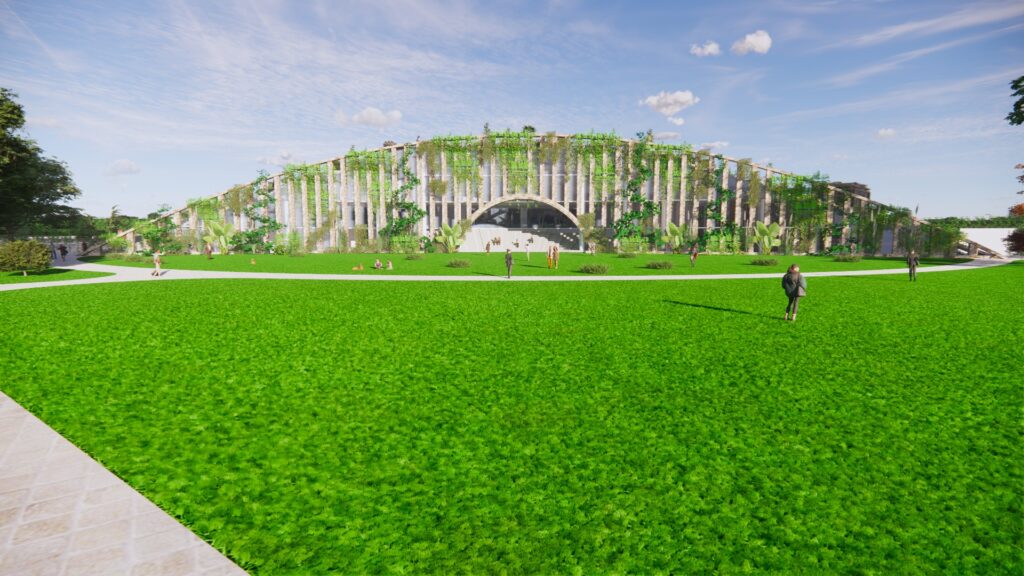
Too often, recycling facilities are treated as back-of-house infrastructure: hidden, technical, and disconnected from public life. In Pokhara, the goal was different.
The Green Venture Zone is designed as a place where visitors, students, entrepreneurs, tourists, and local communities can understand the full cycle of reuse: collection, sorting, transformation, learning, production, display, and sale.
The building includes material banks, education spaces, exhibition areas, workshops, entrepreneur spaces, classrooms, seminar rooms, and public areas. Rather than separating environmental work from civic life, the project brings it into the city.
Inspired by Pokhara
Pokhara is a city of lakes, mountains, tourism, culture, and dramatic natural landscapes. The design responds to this context by avoiding the image of a conventional factory. Instead, the building is conceived as a walkable landscape, a form that visitors can move through, climb, observe, and experience.
The roof becomes part of the public journey. From one side, visitors can move upward; from another, they can come down again. The architecture becomes a route, not only an object.
This was important because the project is also educational. The building itself needed to teach. It needed to make the circular economy spatial, visible, and memorable.
Green jobs and circular economy
The project’s larger purpose is to support green job creation in Pokhara. Recycling and upcycling are not only environmental actions; they are also economic opportunities.
By providing training, tools, workshops, exhibition areas, and business incubation spaces, the Green Venture Zone aims to support new and existing recycling and upcycling entrepreneurs. It creates a bridge between environmental responsibility and local livelihoods.
This is where architecture has a role beyond shelter. It can organize systems. It can give dignity to overlooked work. It can help transform informal practices into visible, teachable, and scalable civic infrastructure.
From design to construction
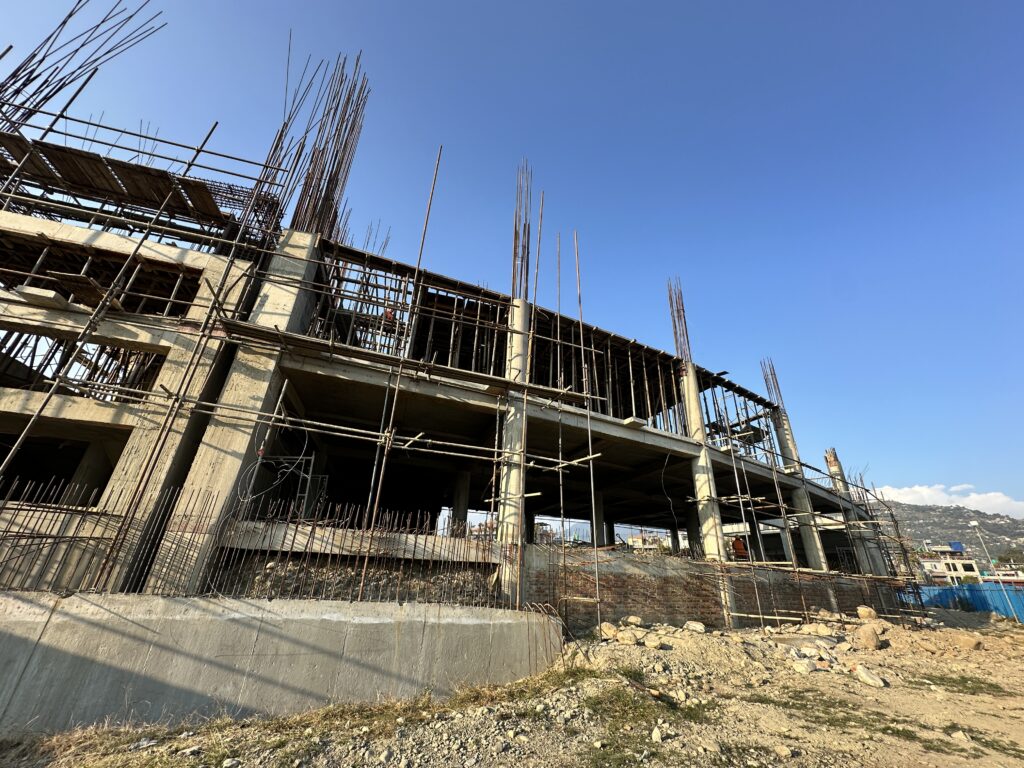
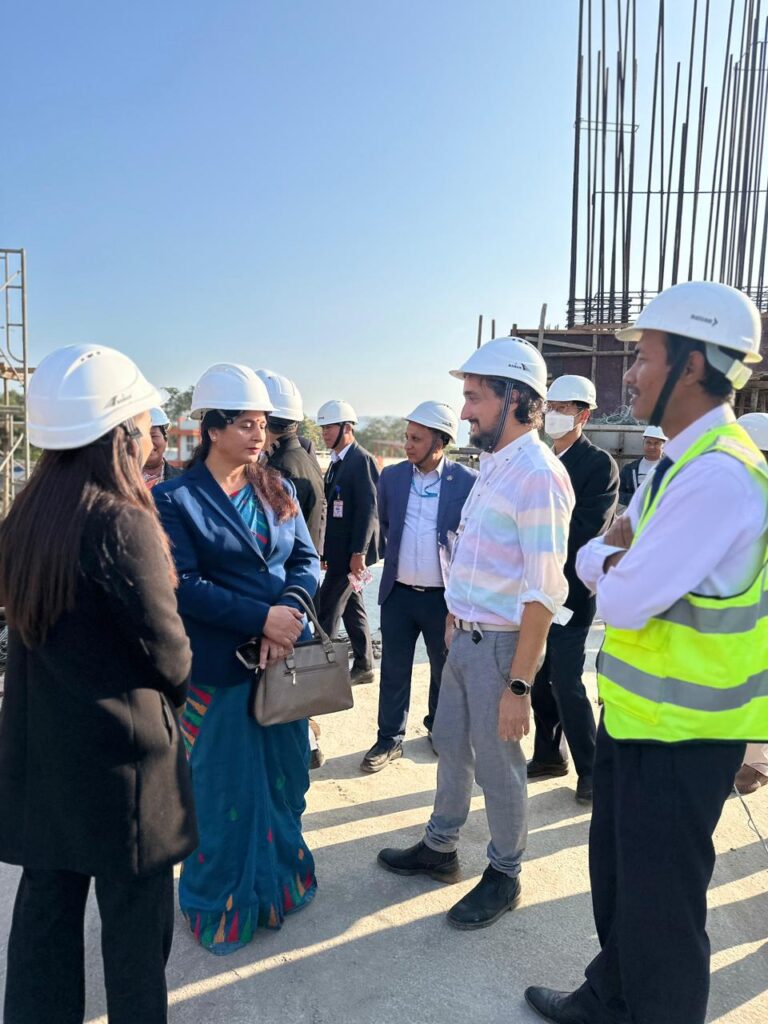
Seeing the project now under construction is especially meaningful. A recent TV report from Pokhara presented the Green Venture Zone as a first-of-its-kind project in Nepal, showing the construction progress and explaining its future role as a centre for recycling, upcycling, environmental education, tourism, and employment.
The construction reports show the project advancing on site, with structural work, metal decking, brickwork, retaining walls, and multiple building blocks progressing.
For an architect, this is always the most important moment: when an idea leaves the drawing and begins to become a physical part of the city.
Architecture as environmental education
The Green Venture Zone is not only about waste management. It is about public imagination.
If people are asked to recycle, they must also be shown what recycling can become. If cities want circular economies, they need places where circular processes are visible. If young people are to learn environmental responsibility, they need spaces where this responsibility is not abstract but tangible.
That is the role I hope this building can play.
A recycling centre can be more than infrastructure. It can be a civic classroom. It can be a place of production, exhibition, and pride. It can show that environmental responsibility is not only a technical issue, but a cultural one.
The Green Venture Zone in Pokhara is one step in that direction.
Pedro Aibéo
Lisbon, 25.06.2026